
Favela
We went on a favela tour. I was a little apprehensive about going on a tour of a favela. Is it a little voyeuristic? I don’t know – you can only read so many accounts of what life is like for those living in a favela or a shanty town, it is something you need to see with your own eyes I suppose. I knew I wanted to see it.
Our guide Ursula, suggested we go with a local tour company called “Don’t Be A Gringo, Be A Local”. www.bealocal.com They were great and our tour guide Patrick was amazing.
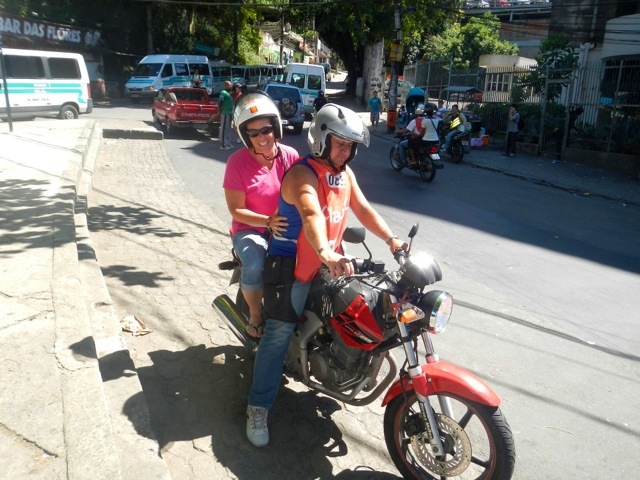
To begin the tour we took a ride on the back of a motorbike to the top of the Rocinha Favela. We didn’t know this was part of the tour – it’s our fault for not knowing but I think maybe for me it was better not knowing. I didn’t think we were going to survive that one bus ride in Peru but it was nothing like this! Racing through the streets, passing trucks & busses on blind corners and I have no idea where I am! It wasn’t a short ride either, well it felt long anyway. At first I was just worried about the speed the driver was going and whipping around the vehicles on the switchback roads but the longer it went on the more worried I was becoming that he was just going to drop me off in the middle of nowhere, I couldn’t find anyone from my group. Well, obviously I survived – I can’t count the number of times on this adventure that I have thought, “this could be it.”
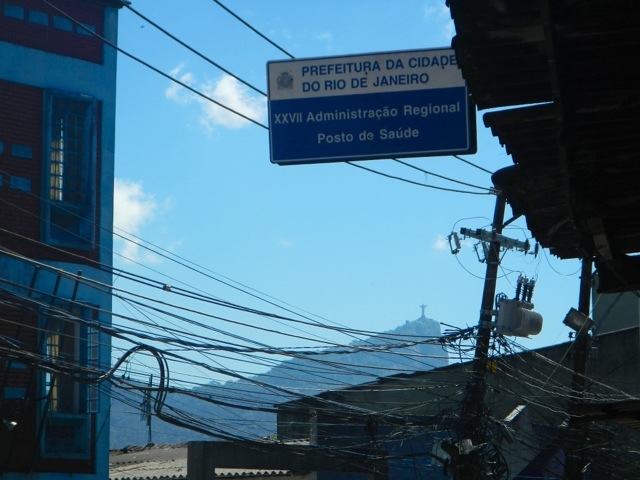
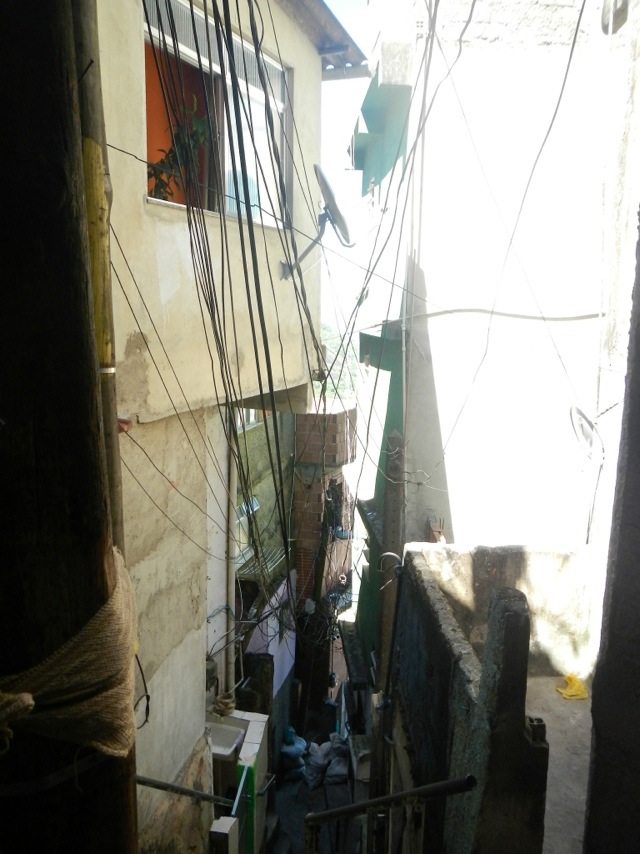
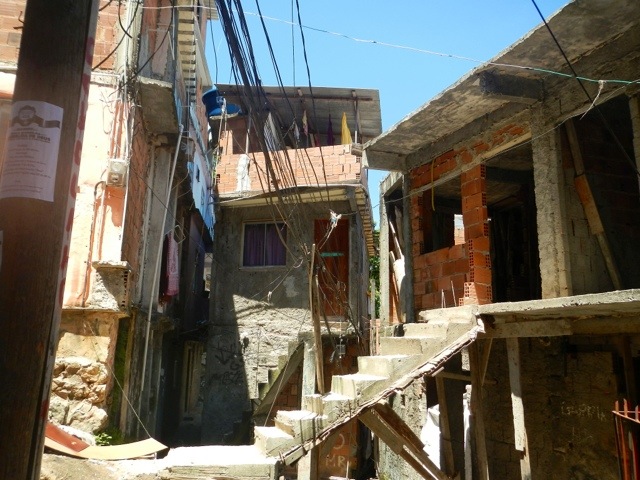
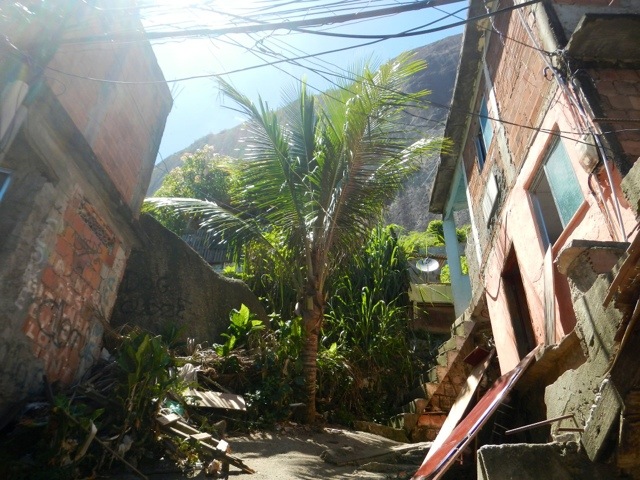
When we all met up at the top, our guide Patrick gave us some “words of wisdom” before we were to begin. The plan was to descend on foot through the favela. He explained that we were really only welcome if we stayed out of their way, and to stay together as a group for safety reasons. He asked us not to take photos of people. We were on our way. I have to say it was an experience. Even just standing on the street corner before the tour began was a learning experience, it did seem a long time until that last person arrived, but just to look at all the electricity cables, some of which I’m sure may have been legit. I don’t know. We were visiting the largest favela in Rio de Janeiro and that the largest favela in Brazil was in Sao Paulo.
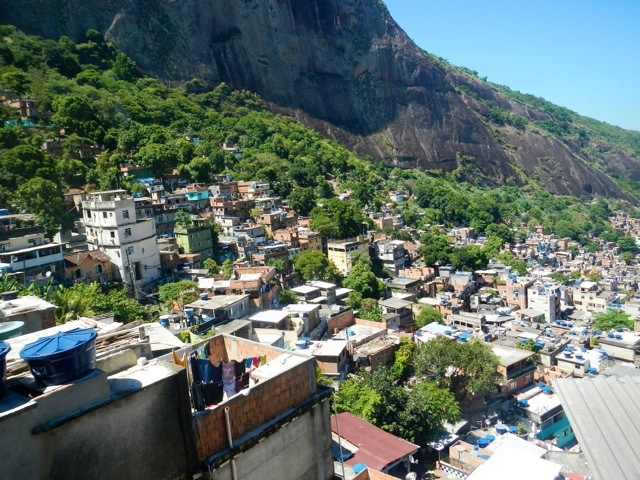
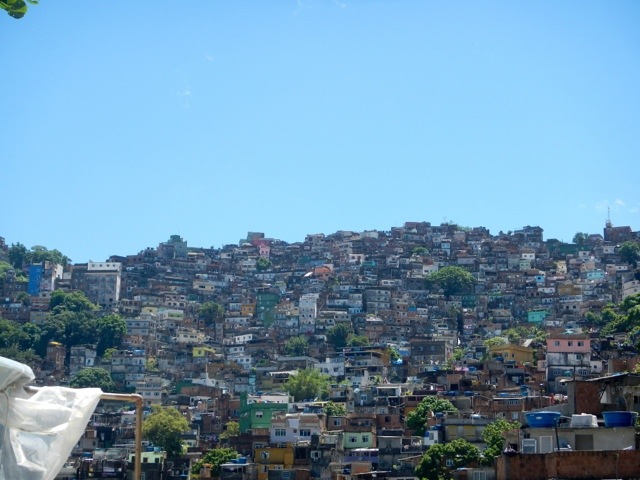
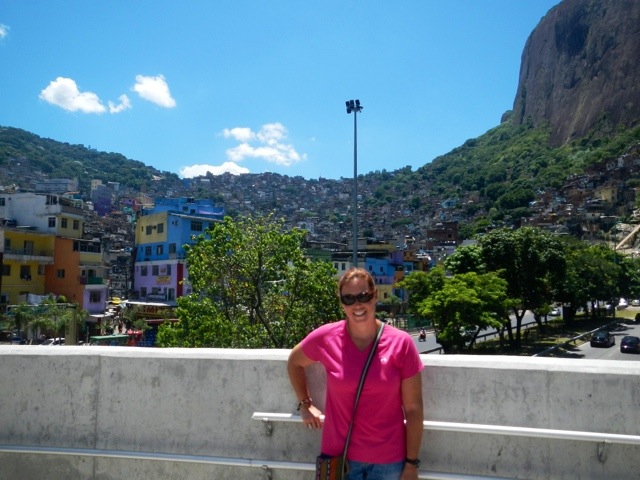
Patrick explained that the favela has everything available that a regular city does – you can still purchase anything you would normally. He explained that this particular favela was the largest in Rio and that between 69000 and 150000 people lived there. It is mind boggling to think about really. Sixty-nine thousand poor or socially disadvantaged people living in slum buildings from simple shacks to permanent structures. Most, especially those on the inside, bottom, there is definitely a hierarchy here, lack safe drinking water, electricity, sanitation, & other basic services. This specific favela had an official police station in it, which is relatively new and not particuclarly welcome. His comment was that both the police and the drug lords rule the same way, by intimidation.
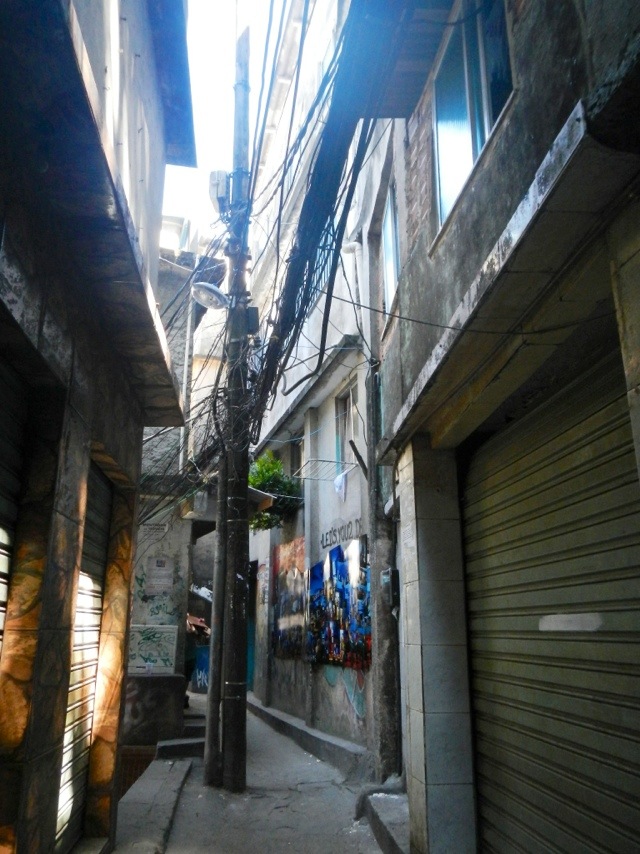
I have to be honest here; when we first walked in, down tiny, tiny alleyways, over garbage, the smell alone was hard to take but I thought, I can do this, this is how some people live, but I have to say that by the end of the tour I had had enough.
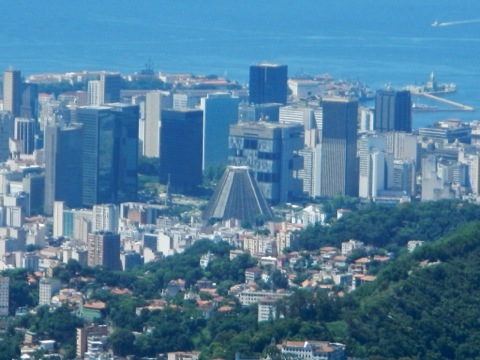
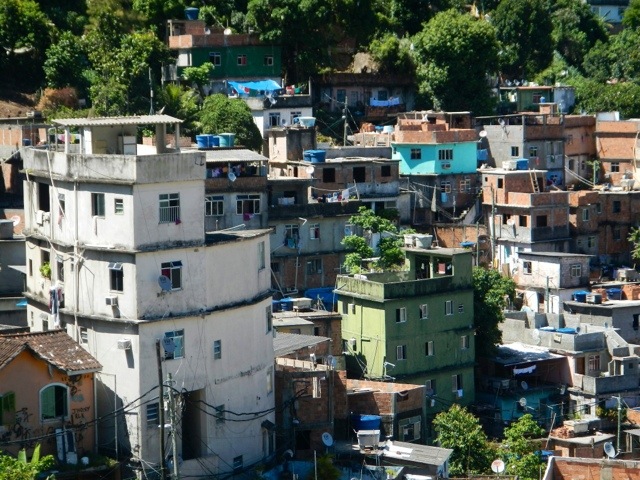
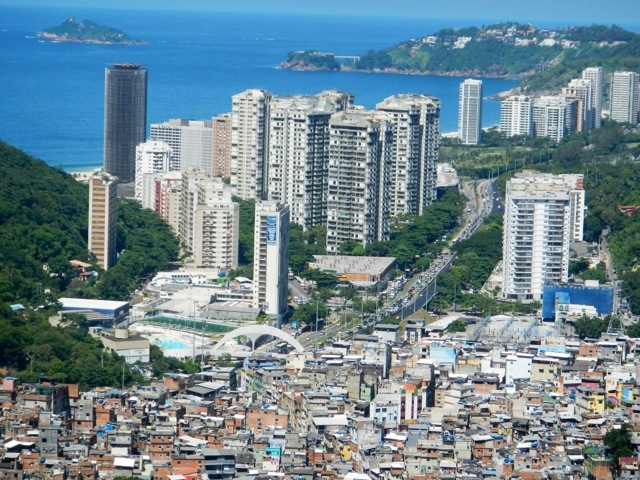
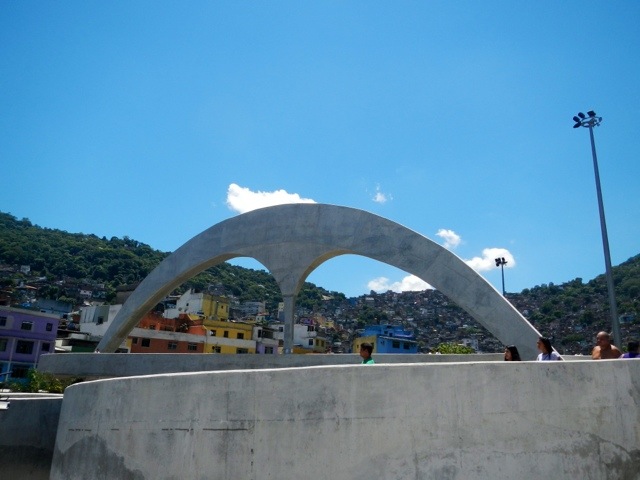
Our first stop was at the top of a building, about three floors up. We really got to see a panoramic view of the favela from there. You could see a large part of Rio, you could see the hierarchy of the favela and why the better homes are on the top & outside. We could see in the windows of a tiny school or kindergarten or maybe it was a daycare, I don’t know.
After that we went to a small artist studio. Patrick had told us that they (I don’t really know who they are) try to encourage people to find a way to earn an income without handouts. So the art studio is one way. It was small & uncomfortable but the artwork was full of talent. Many of the pieces were paintings of the favela & how the homes are set up with lots of colour in the paintings.
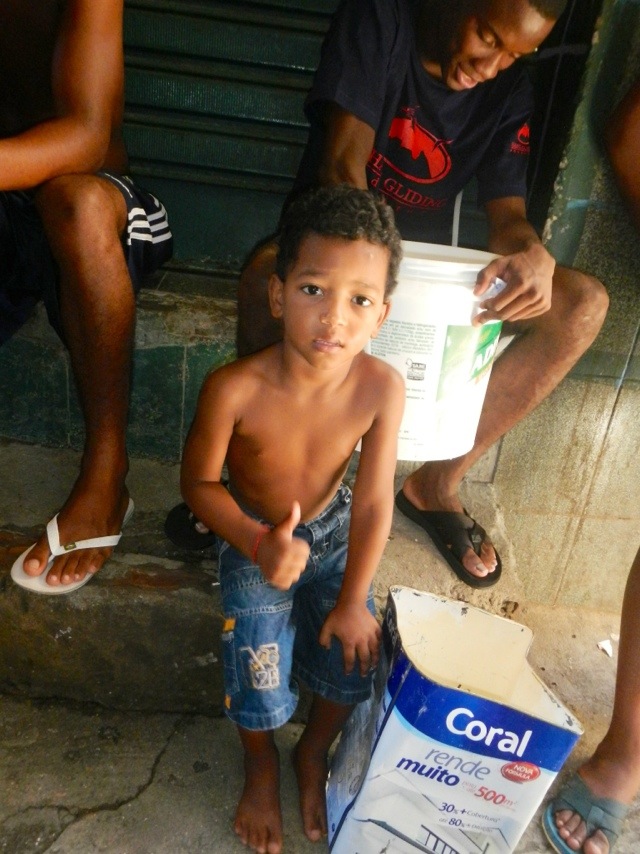
We continued to walk around, winding through tiny alleys, down wet stairs, heading down the hill. We stopped at a little store, bakery kind of place. We all bought something. How could you not support someone living in these conditions? After that we came upon a group of boys playing music & dancing. The older boys were playing with empty buckets & pails. Patrick explained that there is a Samba school that some of the kids attend so the one little boy did a small demonstration for us while the older boys played. It was fun – we all threw some money in the bucket and the little boy replied thank you in English! It was definitely a unique insight into the spirit of the people, especially the kids.
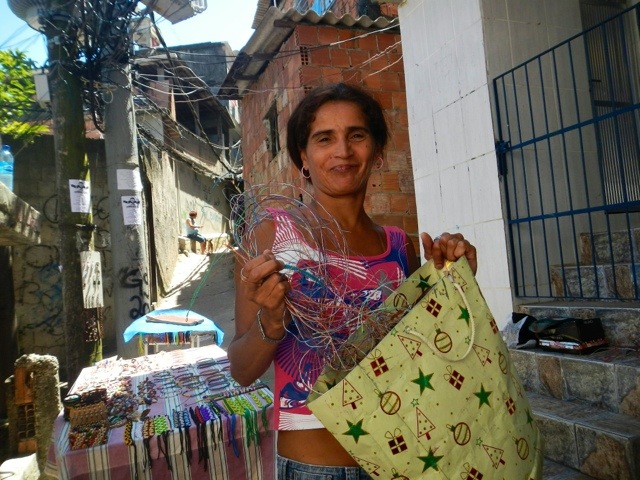
Our next stop was a group of women at a makeshift, tiny market of two tables selling some handmade jewellery and travelers bracelets. Most of us bought something here as well. Some of the bracelets were made out of telephone wire. I bought quite a few, well for all my nieces & nephews! When we started to walk away the lady yelled and ran after me – she had a gift for me and she put a bracelet on my wrist saying it was her present to me! Imagine, the generosity of those who really have nothing!
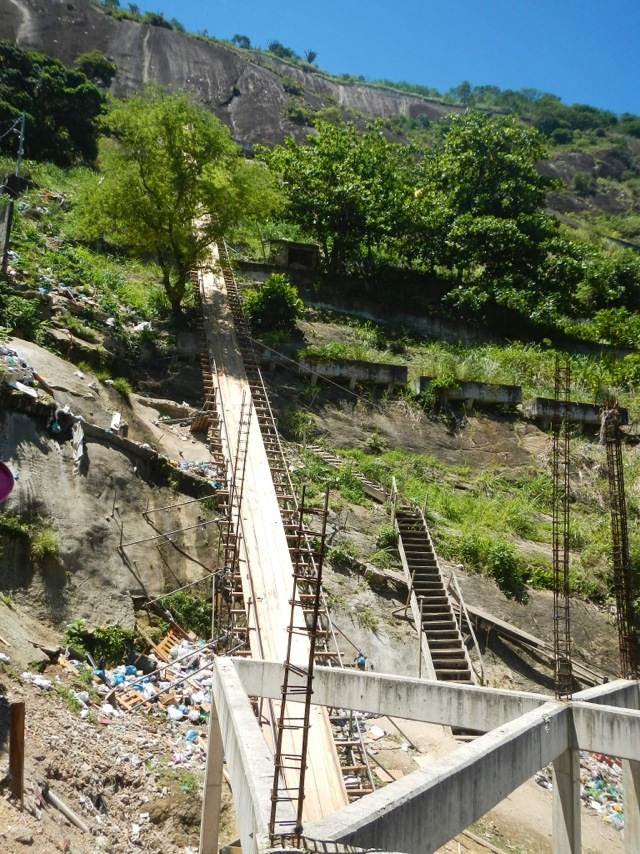
There were some interesting things that you could see walking around. There was a political sign – I don’t know what for, that had bullet holes in it. Patrick explained that it could have something to do with the promises made on the political campaign. There was also a track for a tram or some kind of trolley that had been started but was never finished, he said that was a political move as well and construction was stopped after the election.
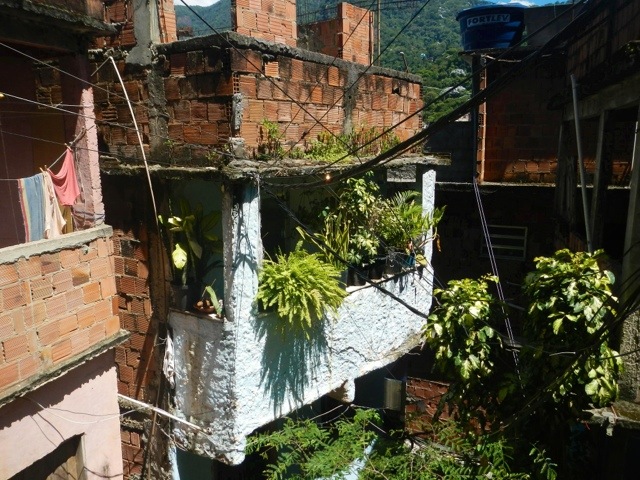
We continued to wander through the favela, winding our way to the bottom. There was more and more garbage the closer you got to the bottom, it was wetter, the homes, if you can call them that were smaller. Some even had trees growing out of them. It was harder to walk around and of course the smell was nasty. I had had enough.
We left shortly after that. It was a little quiet on the ride back to the hotel.
There are over 600 favelas in Rio de Janeiro, one in five residents of Rio live in a favela. Estimates are that there are about 85000 favelas in Brazil. That being said, the term favela can be applied quite loosely apparently to groups of homes, the working poor, etc.
We are not thankful enough sometimes for what we have!





 jennifertravelsdotnet
thanks for the bracelet aunt jenna <3<3<3<3<3<3<3<3<3<3 i love you
LikeLike